Lawsuit Scenario
You Hit a Pedestrian: What Happens to You Financially
By LiabilityGap EditorialUpdated 6 min read
The short answer
Am I automatically at fault if I hit a pedestrian in Canada?
Not automatically, but close in several provinces. Under Ontario's Highway Traffic Act, section 193(1), a driver who strikes a pedestrian is presumed negligent and must prove otherwise. Serious pedestrian injuries commonly produce claims from the high six figures into the millions, against auto policies that typically stop at $1 million or $2 million.
If you hit a pedestrian in several Canadian provinces, the law starts by presuming the crash was your fault — the onus is on you, the driver, to prove you weren't negligent. And the claims are sized like the injuries: a pedestrian has no airbags, so serious collisions routinely produce claims of $1 million to $5 million and beyond, against an auto policy that stops at $1 million or $2 million.
Here's the scenario, the legal tilt against you, and what's actually at stake financially.
The scenario#
Two composites, because pedestrian collisions cluster at two speeds:
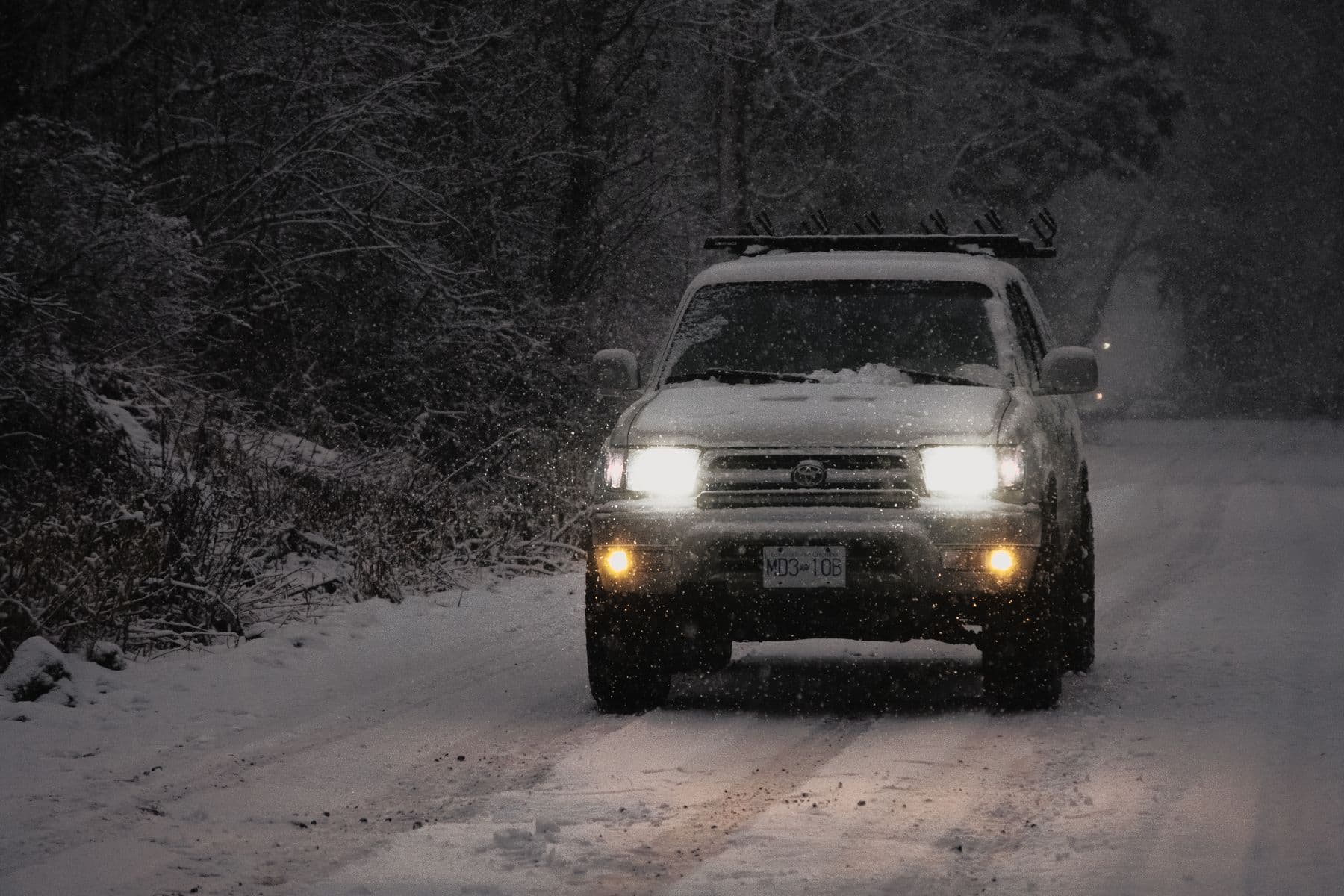
The commute. A Tuesday in November, 5:40 p.m., dark and raining. You're driving a familiar arterial road at the speed of traffic. A 38-year-old warehouse supervisor in dark clothing steps off the curb mid-block, between parked cars. You brake, but the strike happens at roughly 40 km/h. The result: a traumatic brain injury and a shattered lower leg that needs four surgeries. He doesn't return to work. The claim against you: $3.8 million.
The parking lot. Saturday morning, grocery store lot. You're backing out of a spot at walking speed and don't see the 79-year-old behind your bumper. She falls; her hip fractures. For a woman her age, the fracture is the beginning of a cascade — surgery, immobility, loss of independence, a move into assisted living. The claim: $450,000. From a 6 km/h mistake.
Neither driver was street racing. Neither was drunk. That's the point of this page.
The onus is on you#
In an ordinary lawsuit, the injured person has to prove the defendant was negligent. Several provinces flip that for pedestrian collisions: when a vehicle hits a pedestrian, the driver is presumed negligent and must prove the loss didn't arise from their carelessness — Ontario's Highway Traffic Act, section 193(1), contains the best-known version of this reverse onus. The policy logic is simple: the car brings the lethal energy to the encounter, so the car's driver carries the burden.
Practically, this changes everything about your position:
- You start the case needing to disprove negligence — establish your speed, attention, lights, and reaction, often with no witness but yourself.
- "The pedestrian came out of nowhere" is a defence you must prove, not a presumption you enjoy.
- Contributory negligence helps, but it divides fault rather than erasing yours.
| Court's fault split (composite $3.8M claim) | What the pedestrian recovers from you |
|---|---|
| Driver 100% / pedestrian 0% | $3,800,000 |
| Driver 75% / pedestrian 25% (mid-block, dark clothing) | $2,850,000 |
| Driver 50% / pedestrian 50% | $1,900,000 |
| Driver 25% / pedestrian 75% | $950,000 |
Read the right-hand column against a $1 million policy. Even the split where the pedestrian is found three-quarters responsible lands within sight of your limit — and mid-range splits blow past it. Jaywalking discounts the claim; it doesn't dismiss it.
How exposed are you? Most people have no idea.
10 questions. 2 minutes. No email needed to see your score.
Check my lawsuit exposureWhat pedestrian injuries cost#
An unprotected human body against two tonnes of vehicle produces a specific, expensive injury pattern. Canadian awards are driven less by pain-and-suffering (capped around $450,000) than by future care and lost income — which is why the worst injuries dwarf the cap:
| Injury pattern (composite ranges) | Typical claim range (Canada) |
|---|---|
| Fractures with full recovery | $75,000 – $250,000 |
| Orthopedic cascade — multiple surgeries, permanent limp, career change | $250,000 – $1,000,000 |
| Elderly pedestrian, hip fracture → loss of independence | $200,000 – $600,000 |
| Traumatic brain injury, unable to return to work | $1,500,000 – $5,000,000+ |
| Spinal cord injury, lifetime attendant care | $3,000,000 – $10,000,000+ |
| Fatality — claims by spouse and children | varies widely; can reach seven figures for a young family's lost breadwinner |
Illustrative editorial estimates based on the pattern of Canadian claims, not quotes — actual settlements vary with age, recovery, and jurisdiction.
For calibration: the largest reported Canadian motor-vehicle awards — roughly $18.4 million in MacNeil v. Bryan (Ontario, 2009) — show what courts will do when lifetime care is on the table. A brain-injured pedestrian's needs are priced the same way as a brain-injured passenger's.
Criminal and civil: two tracks, one wallet#
A serious pedestrian collision can spawn two proceedings, and drivers routinely confuse them:
- The criminal/quasi-criminal track — careless driving under a provincial highway act, or dangerous driving under the Criminal Code in bad cases. Penalties run to fines, licence consequences, and in the worst cases jail. Your insurer does not defend this and doesn't pay these penalties.
- The civil track — the injured pedestrian's lawsuit for damages. This is where the millions live, it's what your auto policy responds to, and it proceeds regardless of the criminal outcome.
Being acquitted — or never charged at all — does not end the lawsuit. The civil court decides on a balance of probabilities, under the reverse onus, with money rather than guilt at stake. Many drivers who were "cleared" at the roadside have later lost seven-figure civil judgments.
Which policy responds — and where it stops#
Your auto policy's liability section answers the lawsuit: it appoints and pays your lawyers and pays the settlement or judgment up to your limit — commonly $1 million, sometimes $2 million. Then the standard cliff:
- Above the limit, the judgment is enforced against you personally — home, wages, non-registered savings, for as long as the judgment can be renewed.
- Once the limit is exhausted, your insurer's duty to defend generally ends while the claim is still alive.
- If your vehicle struck more than one person — a crosswalk, a bus stop — every victim shares that same single limit.
One regional note: since May 2021, BC's Enhanced Care system has removed most lawsuits arising from crashes within British Columbia, including most pedestrian tort claims inside BC. Tort law still fully applies in the rest of Canada and the United States — the reverse-onus lawsuit described here is alive everywhere a BC driver goes on holiday.
How an umbrella changes it#
A personal umbrella policy adds $1 million to $10 million above your auto limit, typically for $200–$300 per year for the first $1 million and roughly $50–$75 per year for each additional $1 million — estimates from typical broker pricing, not quotes. Against this scenario it does the two things that matter:
- Absorbs the layer of a judgment between your auto limit and the real size of a catastrophic pedestrian claim.
- Keeps paying for your defence after the base policy taps out — under a reverse onus, your lawyers are your case.
Every driver who commutes in the dark half of a Canadian winter is running this scenario nightly at 40 km/h past unlit crosswalks. The premium is small precisely because insurers know most drivers never hit anyone. The judgment is large because courts must fund the one who was hit.
The bottom line#
You can be a competent, sober, attentive driver and still hit a pedestrian you never had a chance to see — and in several provinces you'll begin the lawsuit presumed negligent, defending a claim priced off someone's lifetime of care. The criminal system may well decide you did nothing wrong; the civil system can still hand you a seven-figure bill. Your auto policy fights to a limit chosen by default. The distance between that limit and a brain-injury award is the part you're carrying personally, tonight, on the drive home.
Dark commute, one crosswalk, your limit. Take 2 minutes to see your real exposure.
10 questions. 2 minutes. No email needed to see your score.
Check my lawsuit exposureFrequently asked questions
Am I automatically at fault if I hit a pedestrian in Canada?
Not automatically, but close to it in several provinces: when a vehicle hits a pedestrian, the onus shifts to the driver to prove the loss didn't arise from their negligence. Ontario's Highway Traffic Act contains a well-known version of this reverse onus. You start the lawsuit having to prove a negative.
What if the pedestrian was jaywalking or wearing dark clothing?
It usually reduces your liability rather than eliminating it. Courts apportion fault — a pedestrian found 25% responsible still recovers 75% of their damages from you. On a multi-million-dollar claim, your reduced share can still be several times your policy limit.
How much do pedestrian injury claims cost in Canada?
Serious ones run from the high six figures into the millions. Brain injuries and spinal injuries carry lifetime care and lost-income claims, and even an elderly pedestrian's hip fracture can cascade into a loss-of-independence claim in the hundreds of thousands.
Will I face criminal charges for hitting a pedestrian?
Possibly — careless or dangerous driving charges run on a separate track from the civil claim. Being acquitted, or never charged at all, does not end the lawsuit: civil liability uses a lower standard of proof, and your insurer defends only the civil side, never the criminal one.
Does umbrella insurance cover hitting a pedestrian?
Yes. A personal umbrella policy adds $1 million or more above your auto policy's liability limit and continues funding your defence after the base limit is exhausted — typically about $200–$300 per year for the first $1 million, an estimate rather than a quote.
Sources
How exposed are you? Most people have no idea.
10 questions. 2 minutes. No email needed to see your score.
Check my lawsuit exposureKeep reading
- The complete guideUmbrella Insurance in Canada: The Complete Guide
- RelatedA Snowmobile Collision on the Trail: Liability in Canada
- RelatedBeing Sued After a Fatal Accident
- RelatedUmbrella Insurance With a Teen Driver: Cost and Coverage
- RelatedHow Much Can You Be Sued For After a Car Accident in Canada?
- RelatedUmbrella Insurance in Ontario: Cost and How It Works