Lawsuit Scenario
A Multi-Vehicle Pileup: When One Policy Limit Meets Five Claims
By LiabilityGap EditorialUpdated 6 min read
The short answer
If I injure multiple people in one crash, does each person get my full policy limit?
No. Your auto liability limit is per occurrence, not per victim — several people injured in one chain-reaction crash divide a single policy limit between them. A lone catastrophic brain or spinal injury claim in Canada has been valued at roughly $18.4 million, far beyond most standard $1–2 million policies.
Here is the fact that decides this whole scenario: your auto liability limit is per crash, not per victim. If a chain collision you're blamed for seriously injures five people, they divide one $1 million limit — $200,000 each, on average, against injuries that Canadian courts have individually valued at up to $18.4 million. The limit doesn't multiply. The claims do.
Here's the scenario, the arithmetic, and why this — more than any dog, pool, or teenager — is the strongest case for a $5 million umbrella.
The scenario#
A composite of the kind of highway chain collision Canadian insurers see every winter:
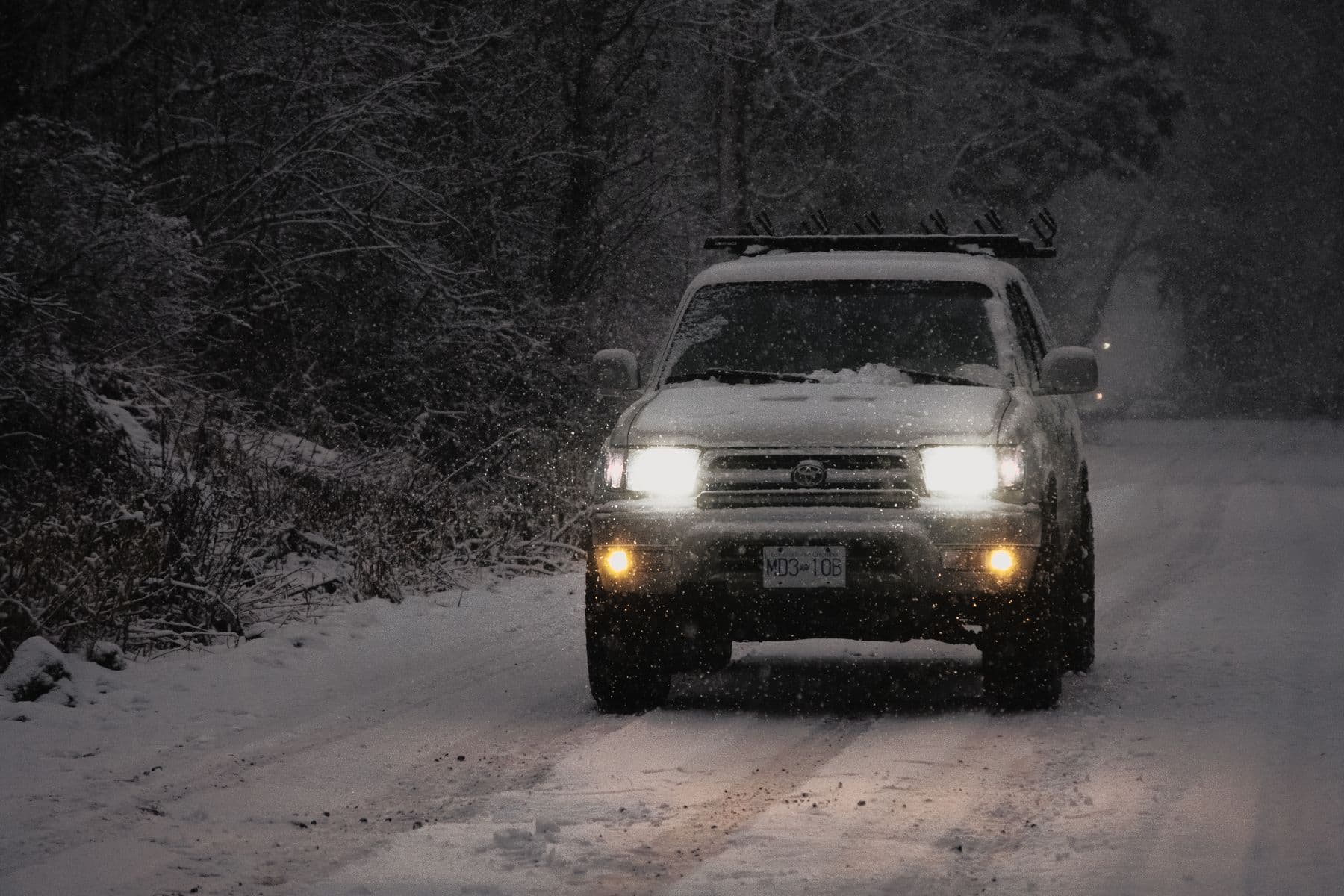
Highway 400 north of Toronto, February, a sudden whiteout. Traffic ahead brakes hard. You don't stop in time and hit the SUV in front of you, pushing it into the next lane; four more vehicles pile in behind and around. When the OPP report is done, you're assessed a major share of the fault for following too closely for conditions.
The injuries across five vehicles: one traumatic brain injury (a 41-year-old engineer), one spinal injury with partial paralysis (a 29-year-old), a shattered femur and hip, and two serious-but-recoverable soft-tissue and psychological claims. Total claims filed against you: $8.5 million. Your policy limit: $1 million.
One limit, five claimants: the arithmetic#
Your liability coverage is a single pool per occurrence. Every claimant from the same crash draws from that one pool, and when the pool is empty, your insurer's duty to defend generally ends — while the claims keep going, against you.
| Claimant (composite) | Claim value | Share of a $1M limit (pro-rata) | Shortfall pursued against you |
|---|---|---|---|
| Brain injury, 41-year-old engineer | $4,500,000 | ~$529,000 | ~$3,971,000 |
| Spinal injury, 29-year-old | $2,800,000 | ~$329,000 | ~$2,471,000 |
| Femur/hip, multiple surgeries | $700,000 | ~$82,000 | ~$618,000 |
| Soft tissue + psychological (x2) | $500,000 | ~$59,000 | ~$441,000 |
| Total | $8,500,000 | $1,000,000 | ~$7,500,000 |
Composite, illustrative figures built from the pattern of Canadian claims — not a prediction of any specific case.
And "pro-rata" is the polite version. In practice, dividing an inadequate limit is a fight: claimants can race each other to judgment, dispute priority, or refuse to settle for their share, and the insurer is left managing one shrinking pool against five sets of lawyers. The only certainty is the total: the policy pays $1 million, once, and roughly $7.5 million of exposure lands on you.
Why even $2 million evaporates#
Upgrading to a $2 million limit — which genuinely is worth doing — still doesn't survive contact with this scenario, because a single catastrophic injury can consume it. These are reported Canadian decisions:
| Case | Year | Injury | Award |
|---|---|---|---|
| MacNeil v. Bryan (Ontario) | 2009 | Catastrophic brain injury, one passenger | ~$18.4 million |
| Morrison v. Greig (Ontario) | 2007 | Paraplegia, one passenger | ~$12.3 million |
| Gordon v. Greig (Ontario, same crash) | 2007 | Brain injury, second passenger | ~$11.4 million |
Look at Morrison and Gordon together: one crash, two catastrophic claims, $23.7 million combined — against defendants who shared one policy. A pileup is that dynamic scaled up: the whole point of a chain collision is that one act of negligence meets many victims at once. The big Canadian awards aren't driven by pain-and-suffering (that's capped around $450,000) but by lifetime care costs and lost future income — and in a pileup, several lifetimes stack against one limit.
How exposed are you? Most people have no idea.
10 questions. 2 minutes. No email needed to see your score.
Check my lawsuit exposure"But I wasn't the only one at fault"#
True, and it helps less than you'd hope. Fault in chain collisions is apportioned — you might carry 60%, the driver behind you 25%, a third driver 15%. Two hard realities remain:
- Your share of $8.5 million is still enormous. Sixty percent is $5.1 million — five times a standard limit.
- In several provinces, jointly liable defendants can each be pursued for the whole judgment. If the other at-fault drivers carry minimum coverage and own nothing, the collectible defendant — the one with a house, savings, and income — can end up paying far more than their percentage, then chasing the others for contributions they'll never collect.
Plaintiffs' lawyers know exactly how this works. In a multi-defendant crash, the defendant with assets is not just a target; they're the budget.
One regional note: since May 2021, BC's Enhanced Care system has removed most lawsuits between people injured in crashes within British Columbia — a BC-internal pileup generally doesn't produce this suit. Tort law still fully applies in the rest of Canada and the US, which is where the rest of us, and every BC driver on an out-of-province trip, live with these numbers.
Which policy responds — and where it stops#
Your auto policy does what it's built to do: appoints and pays lawyers, negotiates with five claimants, and pays out — up to the limit. Then three things happen in sequence:
- The insurer pays its $1 million (or $2 million) and is done.
- Its duty to defend generally ends with the limit — the five ongoing claims are now yours to defend at your own cost.
- Judgments for the shortfall are enforced against you: registered against your home, garnished from your wages, collected from non-registered savings — and renewed, in most provinces, for decades.
There's also a cost the limit never touches: time. Five claimants means five discovery schedules, five expert reports to answer, five settlements to negotiate — a file that stays open for years. With an exhausted policy, every one of those years is billed to you.
The strongest single argument for a $5 million umbrella#
Most liability scenarios are about one bad claim. This one is about simultaneous claims — and it's the reason brokers who've seen a pileup file push clients past $2 million. A personal umbrella policy adds $1 million to $10 million above your auto and home limits, and the pricing is the anticlimax of the whole topic (estimates based on typical broker pricing, not quotes):
- First $1 million of umbrella coverage: roughly $200–$300 per year
- Each additional $1 million: roughly $50–$75 per year
- A $5 million umbrella: typically in the $400–$600 per year range
Run that against the composite above. The gap between a $1 million limit and $8.5 million in claims is $7.5 million. The cost of closing most of that gap is comparable to one tank of gas a month. And because the umbrella keeps funding your defence after the base limit is exhausted, it pays for the very thing a five-claimant fight consumes fastest: lawyers.
The marginal dollars are the cheapest ones. Going from $1 million to $5 million of umbrella coverage costs a fraction of what the first million costs — which is exactly why sizing coverage to a multi-victim crash rather than a single-victim one is the rational move.
The bottom line#
Nobody plans to cause a pileup; that's what "sudden whiteout" means. The exposure isn't about being an unusually bad driver — it's about ordinary fault meeting an unusual number of victims, all of whom share one policy limit that was chosen by default. If a court can value one injured person at $18 million, five injured people against your $1 million isn't a risk. It's a foregone conclusion looking for a date.
One crash, five claimants, your limit. Find out how exposed you actually are.
10 questions. 2 minutes. No email needed to see your score.
Check my lawsuit exposureFrequently asked questions
If I injure multiple people in one crash, does each get my full policy limit?
No. Your liability limit is per occurrence — one crash, one limit. Five injured claimants divide the same $1 million or $2 million between them, and anything a court awards beyond that is enforceable against you personally.
How is one policy limit divided among several injured people?
There's no automatic formula. Claimants may settle pro-rata, race each other to judgment, or fight over priority while the insurer manages one shrinking pool. What never happens is the limit stretching to match the total claims.
Is a $2 million auto policy enough for a multi-vehicle pileup?
Often not. A single catastrophic brain or spinal injury claim in Canada can exceed $2 million on its own — reported awards have reached roughly $18.4 million. A pileup can produce two or three serious claims against one defendant at once.
Can I owe money even if I wasn't the only one at fault?
Yes. Fault in chain collisions is apportioned across drivers, and in several provinces jointly liable defendants can each be pursued for the whole judgment. If the other at-fault drivers are underinsured, the collectible defendant — the one with assets — pays more than their share.
How much umbrella coverage does pileup risk justify?
This scenario is the strongest argument for $5 million rather than $1 million or $2 million. Indicatively, a $1 million umbrella runs about $200–$300 per year and each additional $1 million about $50–$75, so $5 million is typically in the $400–$600 range — estimates, not quotes.
How exposed are you? Most people have no idea.
10 questions. 2 minutes. No email needed to see your score.
Check my lawsuit exposureKeep reading
- The complete guideUmbrella Insurance in Canada: The Complete Guide
- Free toolHow much liability coverage do you need? Calculator
- RelatedCan My Own Passengers Sue Me?
- RelatedDoes Carrying Higher Liability Limits Make You a Target for Bigger Claims?
- GlossaryExcess Limits Counsel
- RelatedOne Facebook Post, One Lawsuit: Social Media Defamation in Canada