Lawsuit Scenario
Your Airbnb Guest Gets Hurt: Who Actually Pays?
By LiabilityGap EditorialUpdated 6 min read
The short answer
If my Airbnb guest is injured at my property, does Airbnb's AirCover cover it, or do I need my own insurance too?
Both may apply, but neither alone is reliable. AirCover's host liability protection covers up to $1 million USD for guest injury claims, but Airbnb itself states it isn't a substitute for personal insurance. Most Canadian home policies exclude short-term rental hosting unless you disclose it and add a home-sharing endorsement before a guest is ever hurt.
When an Airbnb guest gets hurt at your place, three layers can pay: Airbnb's AirCover host liability protection (up to $1 million USD), your own home insurance — but only if it hasn't excluded your hosting — and, where both fall short, you. A guest's broken hip or head injury can produce a claim well past $100,000, and the most common surprise for Canadian hosts isn't the lawsuit. It's discovering which of those layers was never actually in place.
Here's the scenario, the three layers, and the order to fix them in.
The scenario#
A composite of claims Canadian brokers and adjusters describe:
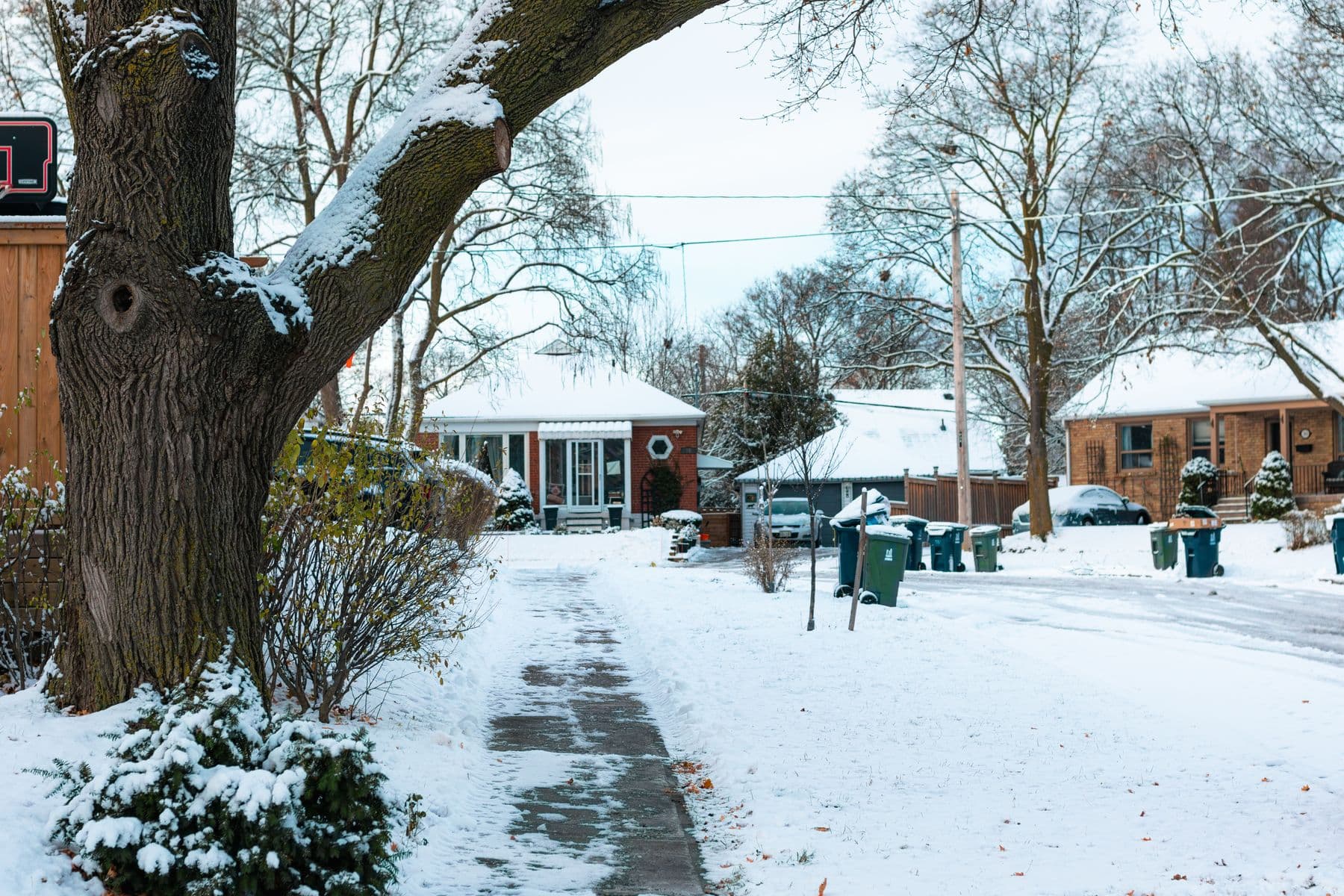
You rent your basement suite on Airbnb most weekends — separate entrance, exterior stairs, solid reviews. In late November, a guest arrives after dark, misses the icy third step, and goes down hard: fractured hip, surgery, months off work. Her lawyer's claim arrives citing the unlit stairway, the worn treads, and the absence of salt or sand — and seeks $400,000 for pain and suffering, lost income, and future care.
You email your home insurer. The adjuster's first question isn't about the stairs. It's: "How long have you been renting the property, and did you tell us?"
Why hosts get sued: occupiers' liability#
Across Canada, the occupier of a property — the person in control of it — owes a duty to take reasonable care that people coming onto the premises are reasonably safe. Most provinces spell this out in occupiers' liability legislation; Quebec reaches the same place through its civil law. Ice, lighting, railings, smoke alarms, hot tubs: all of it is your responsibility, and a paying guest attracts no less duty than an invited friend. If anything, courts and adjusters expect more from someone operating the property for revenue.
Negligence still has to be proven — a guest who slips on shoes she left on the stairs herself has a weak claim. But "reasonably safe" is judged in hindsight, after the injury, by people reading photographs of your stairwell.
The three layers that might pay#
| Layer | What it is | The catch |
|---|---|---|
| AirCover host liability | Up to $1M USD in liability protection for guest injury claims, provided through Airbnb | A program Airbnb arranges — not a policy you own, and not a substitute for personal insurance |
| Your homeowner policy | Personal liability coverage plus a duty to defend you | Commonly excludes or restricts short-term-rental "business use" unless endorsed |
| STR endorsement or dedicated policy | Home-sharing endorsement, or a commercial/STR policy for heavy hosting | Must be arranged — and disclosed — before the claim, not after |
| Umbrella policy | $1M+ sitting above a properly endorsed home policy | Follows the underlying: excluded below usually means excluded above |
What AirCover is — and what it isn't#
Airbnb's AirCover includes host liability protection of up to $1 million USD for claims that a guest was injured (or their property damaged) during a stay. It has paid claims, it costs hosts nothing extra, and for a platform perk it's substantial. Take it seriously.
Then read the fine print on what it isn't:
- It isn't your policy. It's a program Airbnb arranges with its insurers, on terms Airbnb sets and can change. You're a beneficiary of someone else's arrangement, not the client.
- It runs on a claims process. You report through Airbnb and the claim is handled by third-party administrators — a different experience from calling your own broker and having your own insurer take over.
- Don't assume it defends you the way your own insurer must. A personal liability policy owes you a duty to defend: lawyers appointed and paid on your behalf from the first letter. How a platform liability program responds to a lawsuit naming you personally depends on its terms at the time — which is precisely the kind of uncertainty your own policy exists to remove.
- Airbnb itself says it. The company describes host liability protection as not being a substitute for homeowner or personal liability insurance. When the platform providing the perk tells you to carry your own coverage, believe it.
The business-use problem with your home policy#
Here's where Canadian hosts actually get hurt financially. Standard homeowner policies exclude or restrict business use of the home, and insurers generally treat renting to paying guests — especially regularly — as business use. Host without telling your insurer and two bad things can happen at once: the guest-injury claim is denied as an excluded business loss, and the undisclosed change in how the property is used can put your broader coverage in question.
The fix is unglamorous and cheap relative to the risk: tell your insurer, and add a home-sharing or short-term-rental endorsement. Most major Canadian insurers now offer one for occasional hosting; frequent or whole-home hosting may need a dedicated STR or commercial policy instead. Either way, the coverage decision happens before the booking, not after the fall.
How exposed are you? Most people have no idea.
10 questions. 2 minutes. No email needed to see your score.
Check my lawsuit exposureWhat a guest injury costs#
Ranges reflect the pattern in Canadian injury claims generally — estimates, not quotes or predictions:
| Severity | Typical claim range (Canada) |
|---|---|
| Soft-tissue injury, full recovery | $10,000 – $40,000 |
| Fracture requiring surgery, time off work | $50,000 – $150,000 |
| Serious permanent injury — hip, spine, head | $150,000 – $500,000+ |
| Catastrophic injury with lifetime care needs | $1 million+ |
Remember that defence costs ride on top, and that a single limit can be shared: one carbon monoxide incident or one deck collapse can injure an entire booking of four guests, all claiming against the same coverage.
Which layer responds, in what order#
Run the composite claim through the layers. With a properly endorsed home policy, your insurer appoints defence counsel and handles the $400,000 claim up to your limit — this is the backbone. AirCover may also respond, and which layer pays first depends on the terms and other-insurance clauses involved — a coordination problem your broker and insurer sort out, but only if both layers actually exist. With no endorsement and no disclosure, you may be left with AirCover alone, on its terms, with your own lawyer's bills in the meantime — and anything it doesn't cover is enforced against you: the house, the savings, the future income.
How umbrella coverage changes the outcome#
For hosts who've done the first step properly, an umbrella policy is the second: $1 million to $10 million above the endorsed home policy, typically around $200–$300 per year for the first $1 million and $50–$75 per additional $1 million (estimates from typical broker pricing, not quotes). It catches the judgment that outruns the base limit and keeps paying defence costs after the underlying policy exhausts.
The critical caveat: an umbrella follows its underlying policies. Tell the umbrella insurer about the hosting, and make sure the STR endorsement sits underneath. An umbrella over an excluded risk is a roof over a missing house.
The bottom line#
AirCover is a genuine benefit and a terrible foundation. Build the stack in order: disclose your hosting to your insurer, add the short-term-rental endorsement (or a dedicated STR policy if you're hosting at volume), then put an umbrella over the top for the claim that outruns $1 million. Total cost is typically a few hundred dollars a year against a $400,000 statement of claim. The icy step doesn't check your paperwork — the adjuster does.
Hosting changes your risk profile. See your full exposure in 2 minutes.
10 questions. 2 minutes. No email needed to see your score.
Check my lawsuit exposureFrequently asked questions
If my Airbnb guest is injured at my property, am I liable?
You can be. As the occupier, you owe a legal duty to keep the premises reasonably safe for people who come onto them — and a paying guest gets no discount on that duty. Icy steps, a loose railing, or an unmarked hazard can support a negligence claim that easily exceeds $100,000 for a serious injury.
Does Airbnb's AirCover protect hosts if a guest is hurt?
AirCover includes host liability protection of up to $1 million USD for guest injury claims. It's real, but it's a claims program arranged by Airbnb — not a policy you own — and Airbnb itself says it isn't a substitute for your personal insurance.
Does my home insurance cover short-term rental guests?
Often not automatically. Canadian homeowner policies commonly exclude or restrict business use, and insurers generally treat regular short-term renting as business use. Many insurers offer a home-sharing or short-term-rental endorsement — without one, an injury claim from a paying guest may be denied.
What happens if I never told my insurer I host on Airbnb?
You risk a denied claim, and undisclosed material changes to how the home is used can put broader coverage in jeopardy. The fix is cheap by comparison: disclose the hosting and add the proper endorsement before a guest ever checks in.
Does umbrella insurance cover Airbnb hosting?
An umbrella policy can add $1 million or more above a properly endorsed home policy — but umbrellas generally follow the underlying coverage. If your home policy excludes short-term rentals, the umbrella typically won't rescue the claim. Endorsement first, umbrella second.
Sources
How exposed are you? Most people have no idea.
10 questions. 2 minutes. No email needed to see your score.
Check my lawsuit exposureKeep reading
- The complete guideUmbrella Insurance in Canada: The Complete Guide
- RelatedA Neighbour's Kid Gets Hurt on Your Trampoline: Who Pays?
- RelatedA Guest Gets Hurt at Your House Party: Your Liability, Explained
- RelatedWhen a Friend Helps You Move and Gets Hurt
- RelatedYour ATV Passenger Is Seriously Hurt: Who Pays?
- RelatedYour Drunk Guest Crashes on the Way Home: Are You Liable?